Best Van Tracker and Immobiliser: The Thatcham S5 Insurance Guide
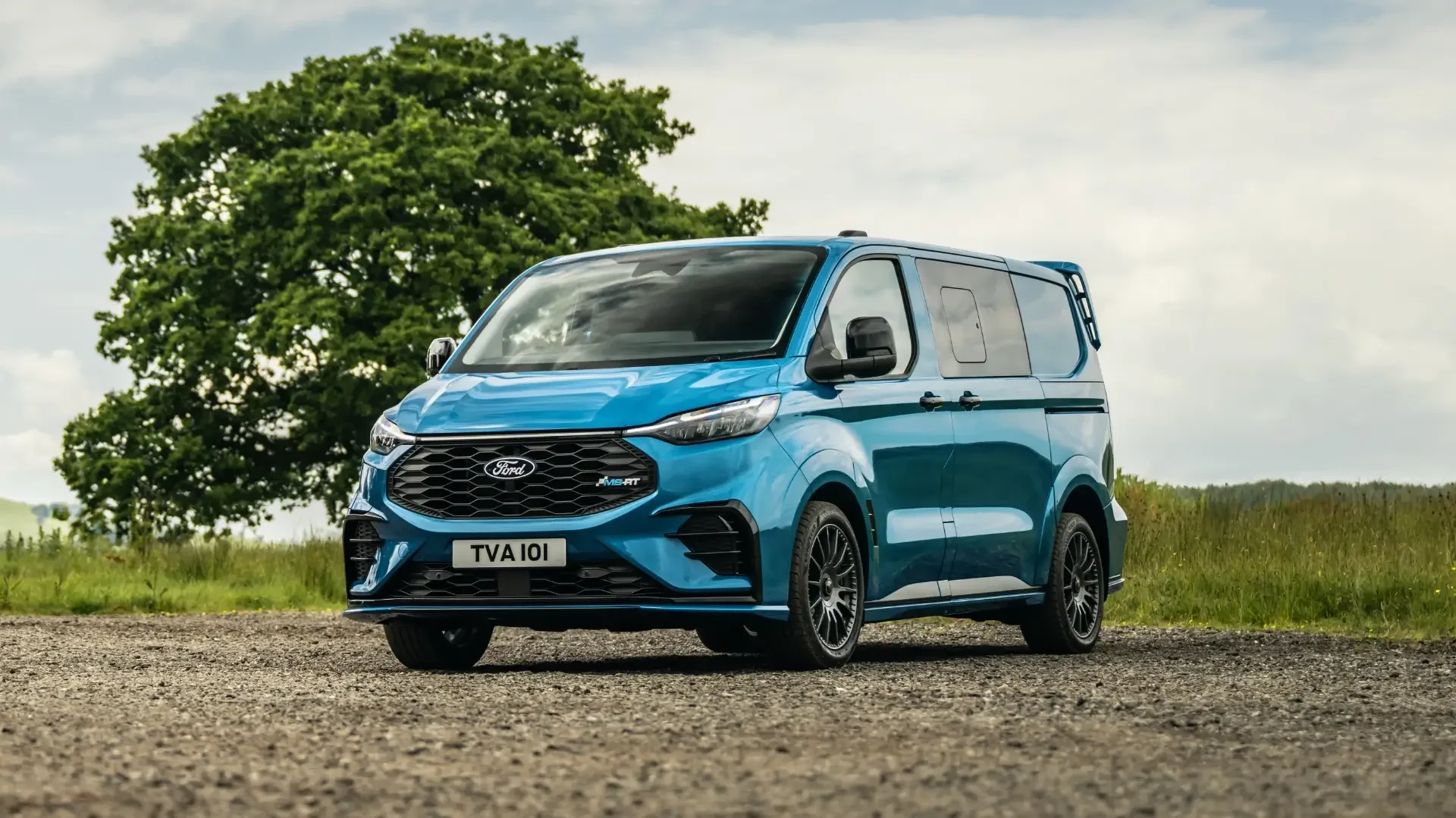
If your insurer or broker has asked for a Thatcham approved tracker on your van, the system they have most likely asked for is a Thatcham Category S5 tracker. We supply and fit two: the Meta Trak S5 Tracker, from £295, and the ScorpionTrack S5, £375, both including installation. Either one will comply with an insurer's request for an S5 tracker, and each has its own strengths, so the choice is yours.
A tracker is a recovery product rather than a theft prevention product. If you want your van protected as well as traceable, we recommend the Meta Trak S5 DEADLOCK, from £469 supply and installation. It is a combined system, carrying both a Thatcham S5 tracker and an advanced engine immobiliser, so it offers recovery and theft prevention together. This guide explains why insurers ask for a tracker on a van, the difference between the S5 and S7 categories your policy may name, and which system to fit.
Why insurers ask van owners for a Thatcham tracker
Insurers set their security requirements largely on what a vehicle is worth and how likely it is to be taken, because that is what they pay out on. A van is rarely worth what a prestige car is worth, but it is stolen far more often, and for a sole trader or a small business the loss is not only the van. It is the work that does not get done while it is gone.
The theft numbers are why vans get their own requirement. DVLA figures obtained under Freedom of Information and analysed by Anglo Scottish Finance, reported by Motoring Research on 25 September 2026, show 5,137 vans stolen in the United Kingdom in the first seven months of 2026, of which 2,778, or 54 percent, were Ford Transits. Direct Line's van theft report, published in June 2025 using DVLA data for 2024, put the annual figure at 11,273 vans, around 31 a day, with only 39 percent recovered by police. Theft volumes have fallen year on year, and they are still high enough that a van is the vehicle an insurer is most likely to attach a security condition to.
What your insurer asks for specifically is set by your policy wording. Some ask for a Thatcham Category S5 tracker, some accept a Category S7, and the two are not the same thing. Send us the wording before you order and we will tell you plainly whether what we fit meets it.
Thatcham S5 and S7 trackers: what the two categories mean
Both categories are real Thatcham accreditations and both are monitored 24/7. They are built for different jobs, and the wording in Thatcham Research's own product definitions makes the difference clear.
- Category S5. A Vehicle Tracking System, whose purpose Thatcham gives as "to detect unauthorised use of a protected vehicle and increasing the probability of the recovery of a stolen vehicle". It requires a driver identification device, so the system knows whether the person moving the vehicle is authorised, and it can alert the monitoring centre the moment the van moves without that identification.
- Category S7. An Asset Location System, whose purpose Thatcham gives as "to increase the probability of the recovery of a stolen asset". It locates the van after it has gone. There is no driver identification, so it cannot tell an unauthorised movement from an authorised one.
In plain terms, an S5 system knows something is wrong while it is happening. An S7 system helps find the van afterwards. That is why insurers attach S5 to higher value vehicles and why, if your policy names S5, an S7 will not satisfy it. We fit both: the Meta Trak S7 from £185 supply and installation, and the ScorpionTrack S7 at £185 supply and installation. Our full range of Thatcham S5 trackers is the place to start if your insurer has named that category.
How a modern van is actually taken
Four methods account for almost all of it, and none of them involve forcing a lock.
- Relay attack. Two people, two devices. One stands near the house and picks up the signal from the key, the other stands at the van and repeats it. The van believes the key is present. Doors open, engine starts.
- Key cloning. A device plugged into the diagnostic socket programs a blank key in under a minute. The thief then drives away with what the van regards as a legitimate key, and can come back for it later.
- OBD port attack. The diagnostic port is a direct line into the vehicle's electronics. Thieves use it to gain access to the vehicle's CAN network and steal the vehicle by digital means.
- CAN bus injection. The newest of the four. The thief does not need to get inside the van at all. They access the vehicle's CAN network from outside the vehicle and inject a message telling it that a valid key has been presented.
These are not fringe techniques. The Crime and Policing Act 2026 made it an offence to possess, import, make, adapt, supply or offer to supply an electronic device for use in the theft of a vehicle, carrying up to five years' imprisonment, an unlimited fine, or both, according to the Home Office factsheet published alongside the Act. Writing on 30 April 2026, Thatcham Research said the law places the burden on the individual to demonstrate a legitimate purpose for holding one. Legislation does not usually arrive ahead of a problem.
Why the factory security does not stop any of it
Every new vehicle sold in the UK since October 1998 has a factory fitted Thatcham Category 2 immobiliser. Your van has one. It is well engineered and it is not broken. It is also, in every one of the four attacks above, completely bypassed, and the reason is structural rather than a fault in the part.
The factory fitted immobiliser is original equipment. It is wired into the vehicle from build, interconnected with the vehicle's communication network, and in constant contact with the manufacturer's own electronic systems. That interconnection is exactly what makes it vulnerable.
Follow the sequence. The thief exploits a factory security vulnerability. The vehicle's own electronics are told that a valid key or signal is present. Those electronics instruct the factory fitted immobiliser to disarm. And it obeys, because the instruction arrived from systems it was built to trust. It does not fail. It obeys.
An aftermarket immobiliser is not in that conversation. It is fitted after the van was built, it is not wired into the manufacturer's security architecture, and it runs its own encrypted authentication. A factory exploit does not reach it. There is a second advantage as well: factory security is standardised, so a single exploit scales across a whole model range, which matters more on a van than on almost anything else. More than half of every van stolen in the UK this year has been a Transit, which tells you how well a repeatable method pays. An aftermarket system is not standardised. A thief cannot know which system is fitted or where it has been placed, so they would have to defeat both at once with no ready made tool for the second. In practice they move to an easier target.
None of this is a criticism of the Thatcham Category 2 standard. A Category 2 immobiliser fitted in the aftermarket would be effective for precisely the same reason. The problem is the interconnection, not the category. The full version of that argument is set out in our complete guide to vehicle immobilisers, and the CAN bus injection route is worked through in detail in our post on why a factory immobiliser will not stop CAN bus injection.
The honest part: what a tracker does and does not do
A tracker does not prevent theft. It aids recovery. If your van is taken, a Thatcham Category S5 system lets a monitoring centre locate it and work with the police to get it back. That is also exactly why insurers care about it. A recovered van is a reduced payout, so a tracker lowers their exposure.
It does not lower yours in the way most people assume when they fit one. Your van is still gone for days or weeks, you still deal with the claim, and if it comes back it may come back damaged. On the DVLA data above, fewer than four in ten stolen vans were recovered by police at all.
Which is why we always recommend the combined tracker and immobiliser rather than the tracker alone, whatever your insurer has strictly asked for. The tracker gets it back. The immobiliser is the part that stops it leaving.
What we recommend for a van
If your insurer has asked for a tracker
Both of our S5 systems are Thatcham Category S5 accredited and monitored 24/7, and either will comply with an insurer's request for an S5 tracker.
- Meta Trak S5 Tracker, from £295 supply and installation. Your first subscription term is chosen at checkout, 1 year at £189.95 or 3 years at £499.95, and is included in what you pay us. Covered by Meta Trak's lifetime parts and labour warranty, for the original owner with an active subscription.
- ScorpionTrack S5, £375 supply and installation. You choose and pay for your subscription directly with ScorpionTrack after installation. Covered by ScorpionTrack's 2 year manufacturer warranty.
Each has its pros and cons, so it comes down to which suits you. Our ScorpionTrack S5 buyer's guide and our complete Thatcham S5 tracker buyer's guide go through them in detail, or call us on 0330 133 3990 and we will talk you through it.
If you want theft prevention as well
Step up to a tracker and immobiliser. The Meta Trak S5 DEADLOCK is from £469 supply and installation and combines a Thatcham S5 tracker with an advanced engine immobiliser, giving you both recovery and theft prevention. Because that immobiliser does not take its instructions from the factory communication network, it blocks the start attempt whatever the vehicle's electronics have been told, and whichever route the attack came in by: relay, key cloning, the diagnostic port, or a message injected into the CAN network from outside the vehicle. The system includes a Thatcham CAT2E accredited immobiliser, which you can read more about in our Thatcham Category 2E guide.
For most van owners, this is the system. It is the one we would fit to our own van.
If your van is electric
Fit the standard Meta Trak S5 DEADLOCK. It can be fitted to any powertrain on any manufacturer and model, so an electric van is not a problem. The Meta Trak S5 DEADLOCK E-TEC is a specialist system for electrified vehicles that appear on Meta Trak's own compatibility list, and no van manufacturer currently appears on it, so the standard system is the one for your van. You can check the current list on Meta Trak's website, or call us on 0330 133 3990 and we will confirm it for your vehicle.
If you want the maximum protection
The Meta Trak S5 DEADLOCK PRO, from £599 supply and installation, is for customers wanting the maximum protection for their vehicle. It adds remote OBD port immobilisation on top of the DEADLOCK, preventing connection and communication through the diagnostic port itself, which stops injected software damaging ECUs, data being taken, and new keys being coded through that port.
Often searched as an OBD blocker or OBD port blocker, what we fit is an OBD port immobiliser, wired directly into the port itself so access can be allowed or denied remotely, rather than a physical cage that needs a key. The rest of the range sits on our OBD port immobilisers page.
If you only want an immobiliser
Some owners already have tracking they are happy with, or simply do not want a subscription. In that case the Meta AUTOBLOK is the one to fit, at £349 supply and installation. It is a standalone engine immobiliser with no subscription of any kind, covered by a 3 year warranty. Bear in mind that it does not track, so it protects the van without helping you recover it if it does go.
If you run more than one van
Businesses running several vehicles usually want visibility as well as security. Our fleet trackers page covers the self monitored systems, including the Meta Trak Shield from £225 and the Meta Trak Shield PRO from £474, which adds remote immobilisation you arm and disarm yourself through the Meta Trak app or a PC. When armed, it blocks the start attempt. It is a different approach from the DEADLOCK, which immobilises automatically without anything to remember, so tell us how the vans are used and we will tell you which fits.
How buying works
- Choose your system on the product page. For Meta Trak tracking systems, you select your first subscription term, 1 year or 3 years, and it is included in what you pay us at checkout. When that term ends, renewals are paid directly to Meta Trak. For the ScorpionTrack systems, you choose and pay for your subscription directly with ScorpionTrack after installation. The Meta AUTOBLOK has no subscription at all.
- We contact you to arrange the fit. Installation is UK wide and comes to you, at home or at work, in an estimated 2 to 5 days. We never state a guaranteed date before we have spoken to you.
- An engineer fits the system, and on completion of the installation it is tested to make sure it is fully functioning correctly.
- The certificate of installation your insurer will ask for is emailed to you by the product manufacturer after activation. Sometimes it can also be found in the manufacturer's app.
If you would rather talk it through before ordering, call 0330 133 3990, or use the advisor below.
Not sure which tracker and immobiliser setup is right for your van?
Answer a few quick questions and get a tailored recommendation for your vehicle, from a compliant S5 Tracker to a full tracker and immobiliser setup with OBD protection. It takes about two minutes.
Thatcham approved | Free nationwide installation | Insurance accepted
Frequently asked questions
Why has my insurer asked for a Thatcham tracker on my van?
Because of how often vans are stolen and what the insurer stands to pay out. DVLA figures analysed by Anglo Scottish Finance and reported by Motoring Research in September 2026 show 5,137 vans stolen in the UK in the first seven months of 2026, and Direct Line's June 2025 van theft report found that only 39 percent of stolen vans were recovered by police. A tracker helps the monitoring centre and the police recover the van, which reduces what the insurer has to pay.
Does my van need a Thatcham S5 or an S7 tracker?
Your policy wording decides. A Category S5 system is a Vehicle Tracking System with driver identification, so it can tell an unauthorised movement from an authorised one and raise the alarm while the theft is happening. A Category S7 system is an Asset Location System, which helps locate the van after it has been taken. If your insurer names S5, an S7 will not satisfy it. Send us your policy wording before you order and we will tell you plainly whether what we fit meets it.
Which system do you recommend for a Ford Transit?
The Meta Trak S5 DEADLOCK, from £469 supply and installation. The Transit accounted for 54 percent of vans stolen in the UK in the first seven months of 2026 according to DVLA figures reported by Motoring Research, and a repeatable factory exploit is what makes a single model that attractive. The DEADLOCK combines a Thatcham S5 tracker for recovery with an aftermarket engine immobiliser that the factory exploit does not reach. If your insurer has asked only for a tracker, the Meta Trak S5 Tracker from £295 or the ScorpionTrack S5 at £375 will satisfy that request.
Does an electric van need a different system?
No. The standard Meta Trak S5 DEADLOCK can be fitted to any powertrain on any manufacturer and model, including a fully electric van. The Meta Trak S5 DEADLOCK E-TEC is a specialist system for electrified vehicles that appear on Meta Trak's compatibility list, and no van manufacturer currently appears on that list. If you are not sure, call us on 0330 133 3990 and we will confirm it for your vehicle.
Will an immobiliser stop my van being taken if a thief clones a key?
Yes. An aftermarket immobiliser does not take its instructions from the factory communication network, so it blocks the start attempt whatever the vehicle's electronics have been told, and whichever route the attack came in by, including a cloned key, a relay attack, the diagnostic port or a message injected into the CAN network from outside the vehicle. The factory fitted immobiliser is bypassed in those attacks because it is built to trust those systems. An aftermarket system is not.
How long does installation take and where is it done?
Supply and installation is UK wide in an estimated 2 to 5 days, and our engineer comes to you, at home or at work. The fit itself is usually a few hours. We arrange the appointment with you after your order and we do not commit to a date before we have spoken to you.
Ready to protect your van?
Get a tailored recommendation, browse the full range, or speak to our team directly.
Sources
- Motoring Research, Ford Transit is the UK's most stolen van by far, 25 September 2026. DVLA data obtained under Freedom of Information and analysed by Anglo Scottish Finance.
- Direct Line for Business, van theft report, 25 June 2025. DVLA data for 2024 obtained under Freedom of Information.
- Thatcham Research, Vehicle Security Product Definitions and Guidelines.
- Thatcham Research, Crime and Policing Act 2026 strengthens UK vehicle security, 30 April 2026.
- Home Office, Crime and Policing Act 2026 serious crime factsheet, GOV.UK.
Pricing accurate at time of publishing.